Press Release
QSR Operators Report Staffing Shortages as 70% Cite Unfilled Positions Heading into Busiest Season
Industry Turns to Kitchen Automation as Permanent Solution After Breaking Point Year. As restaurants enter their busiest weeks of the year, 70% of operators report job openings that are tougher than ever to fill, while 45% say they don't have enough employees to support existing customer demand, according to the National Restaurant Association.
December 22, 2025
LOS ANGELES, Calif. – December 3, 2025– As restaurants enter their busiest weeks of the year, 70% of operators report job openings that are tougher than ever to fill, while 45% say they don't have enough employees to support existing customer demand, according to the National Restaurant Association. The holiday staffing crisis—marked by call-outs during peak volume, managers covering fry station shifts, and emergency hiring at premium wages—has operators fundamentally rethinking their 2026 operational strategy.
The challenge is structural, not seasonal. The average restaurant turnover rate exceeds 144%, with the quick-service segment facing even steeper losses. Replacing back-of-house workers costs an average of $6,000 per position. For QSR operators, the math is unavoidable: holiday overtime, constant recruitment, training failures, and manager burnout represent a permanent drag on profitability.
"Restaurant operators told us 2025 was their breaking point," said Rodney Guerrero, VP of Sales for Miso Robotics. "When you're spending the holidays covering fry station shifts yourself instead of managing your business, the old model isn't just broken—it's unsustainable. The operators using technology to transform now will dominate 2026, while their competitors will simply repeat this unsustainable labor crisis."
Kitchen automation is emerging as the strategic answer to today’s structural labor shortages. 69% of operators who added automation technology report their restaurants became more efficient and productive, with systems now handling high-volume operations that previously required constant staffing attention. The technology addresses the industry's most acute pain point: maintaining consistent quality and safety during peak periods without relying on a perpetually churning and often unavailable workforce.
52% of restaurant operators globally plan to invest in kitchen automation, signaling an industry-wide shift from temporary staffing fixes to permanent operational transformation using technology. Restaurant tech adopters report labor costs dropping by 15%, while monthly sales rise 20%. White Castle's expansion of Miso Robotics’ automated fry stations across its portfolio demonstrates the industry’s growing confidence in adopting restaurant technology.
"Restaurant operators know 2026 can't be another year like this one," Guerrero added. "The question isn't whether to transform—it's whether you'll act now or wait until your general managers are covering shifts again next December."
Included In This Story

Miso Robotics
Delivering AI-powered technology that elevates human potential in the kitchen.
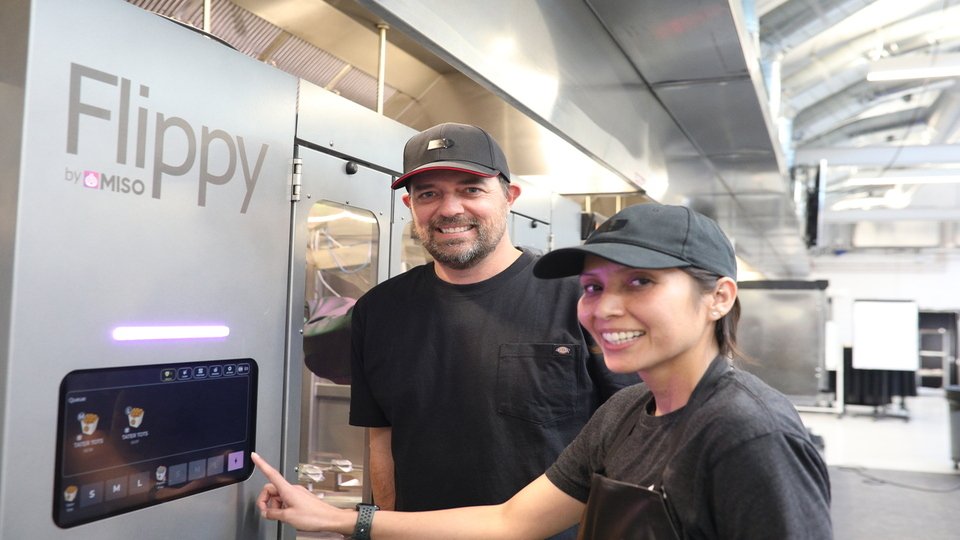
Through the AI-powered 'Flippy' fry station, Miso deploys proven AI automation that solves the fry station staffing crisis for high-volume restaurant chains. Flippy automates your entire fried menu operations end-to-end, the industry's most dangerous and hardest-to-staff position.
Related Media
Subscribe
Get the latest news and resources from QSR Web.
Recent Posts