Operations
QSR closures reveal a shift from growth at all costs
As Wendy's closes underperforming restaurants, development data suggests the next phase of restaurant growth will be defined by stronger unit economics and smaller, smarter formats.
August 13, 2026 by Valerie Gritton
 ChatGPT
 Grok
Grok Perplexity
 Claude
During the first half of 2026, an estimated 8,171 restaurant locations closed across the United States and Canada, according to recent market analysis from RestaurantData. At the same time, RestaurantData tracked 9,541 restaurant opening and development records across the U.S. between January and June.
The figures aren't directly comparable as opening data includes development activity along with complete restaurant openings. Meanwhile, the closures represents locations that shut down. Taken together, the numbers illustrate something important: the restaurant industry isn't simply shrinking. It is being reshaped.
The churn is particularly visible among established chains and quick-service restaurants, where operators are confronting higher operating costs, changing consumer behavior, increased competition and growing pressure from investors to deliver profitable growth.
At the same time, new concepts continue to emerge, particularly among independent and early-stage multi-unit operators.
According to RestaurantData, independent restaurants represented 5,820 records, or 61% of all tracked opening and development activity during the first half of the year. Micro and emerging multi-unit operators accounted for another 1,643 records, while established multi-unit and chain operators represented 2,051.
That suggests the next chapter of restaurant growth may not be dominated by the largest national chains. Instead, the market is becoming increasingly fragmented, with smaller operators finding opportunities where established concepts may no longer fit.
The restaurant is moving closer to the customer
Location data offers another important clue about where the industry is headed.
Shopping centers and mixed-use developments accounted for 6,205 RestaurantData records, or 65% of all tracked opening and development activity. Free-standing buildings represented another 21.5%.
That matters because restaurants are increasingly becoming part of larger consumer destinations.
For some customers, the restaurant is a destination in itself. For others, it is part of a shopping trip, a workday, a family outing or a social experience. The physical restaurant is therefore being shaped less by a one-size-fits-all model and more by the occasion it is designed to serve.
And that is particularly relevant to the quick-service segment.
QSRs have historically relied on highly standardized footprints designed to accommodate dining rooms, counters and drive-thrus. But digital ordering, mobile apps, delivery and increasingly sophisticated drive-thru operations have changed the way customers interact with those restaurants.
The result is a growing interest in smaller, smarter and more purpose-built formats.
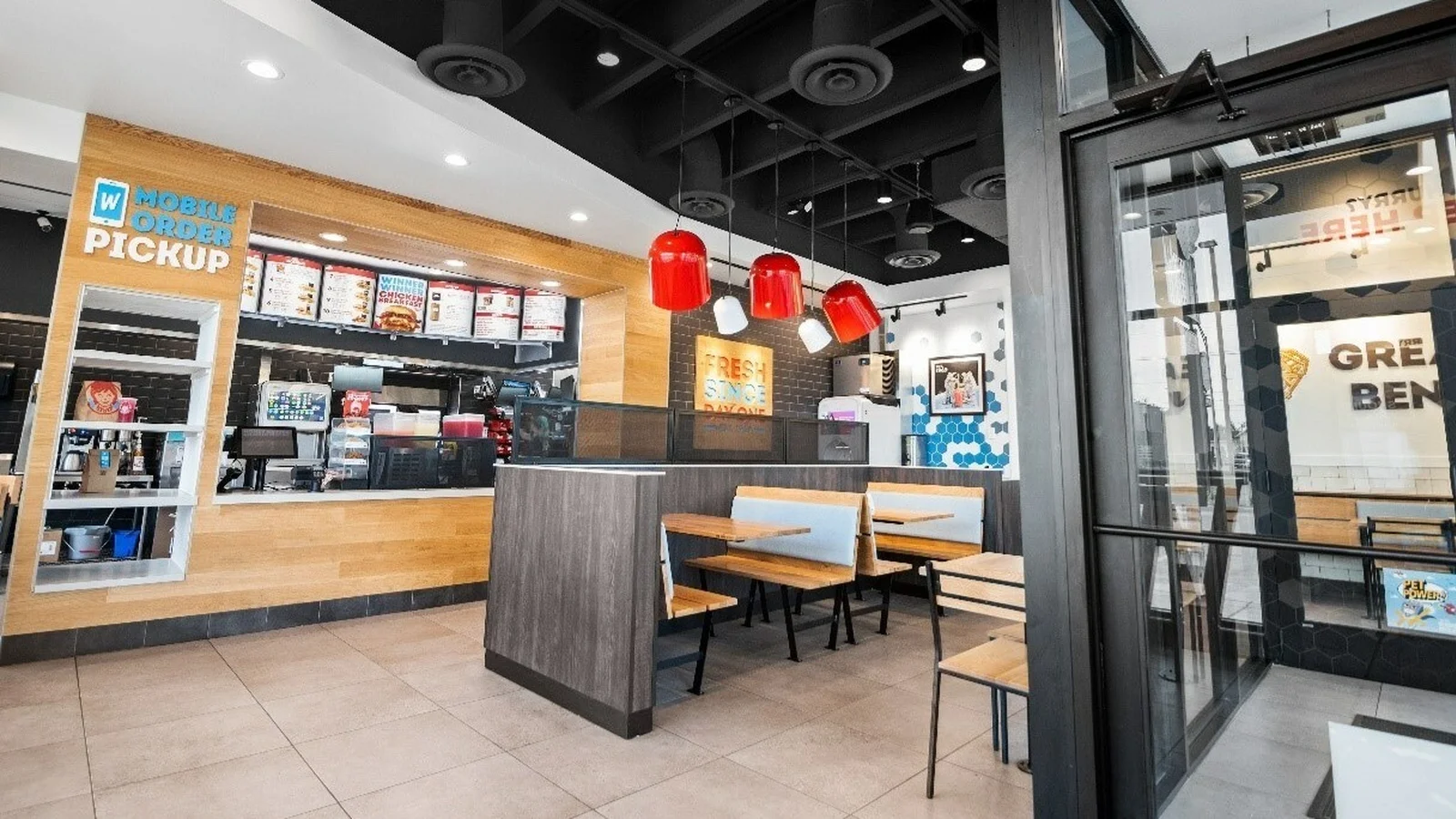
In 2023, Wendy's unveiled its Global Next Gen format, designed around speed and efficiency. And in 2025 announced that every new U.S. restaurant will open under the Global Next Gen format.
It takes 5 steps for the average employee to walk from the front register to the drive-thru window, said Vancouver, B.C. franchisee and president, Fast Family Foods, Todd Lewis, said in a video on the company's website. And it takes 15 steps to walk from the front register to the dishwash sink.
"The idea that you can put a full Wendy's kitchen into such a small footprint, but still have ample room for bodies to move and go around," is a testament to Wendy's willingness to expand its footprint through a smaller, smarter design, Lewis said in the video.
It's no secret that restaurants are leaning into smaller footprint locations as QSR's simultaneously navigate closures and growth.
RestaurantData's first-half data found that quick-service restaurants accounted for 1,507 opening and development records, or 15.8% of the 9,541 total. Fast casual represented 1,993 records, while casual and family dining led the service categories with 4,605 records.
So what do the closures say?
For large chains, many are closing underperforming locations while investing in restaurants with stronger unit economics or investing in the health of their system overall.
Wendy's is another example of this. So far in 2026, the company has closed 289 underperforming locations in an effort to rebuild profitability for the company and its franchisees.
"When it came to closures, I think what you heard in some previous quarters was closures (were) addressed more as a program for the system. You will see us take a much more targeted approach. We are going to come alongside our franchisees if they need our help," said Wendy's CEO and president Bob Wright, during the company's Q2 earnings call.
"If we need to use closures of a few restaurants here and there to make a portfolio a little bit healthier and help that franchisee get to the right place — maybe a trade area has moved on, and it's no longer a business that's viable going forward — then we'll certainly help them make that decision, close a restaurant, and get their portfolio healthier," he said.
"Overall, the health of the system is tied to the health of the brand. I'm just thrilled to say that franchisees are invested in the work that we're doing. They're excited about the work that we're doing, and they're certainly looking forward to the progress on the top-line. Because at the end of the day, nothing cures financial health in a restaurant system like top-line growth."
Related Media
Subscribe
Get the latest news and resources from QSR Web.
Recent Posts




Recent Podcasts