Technology
How AI-powered digital signage drives QSR growth in 2026
To navigate economic uncertainty and declining consumer sentiment in 2026, quick-serve restaurants can drive growth by investing in AI-powered digital signage to personalize the customer experience and optimize daily operations.
July 31, 2026 by Misty Chalk — Vice President of Sales, Americas, BrightSign
 ChatGPT
 Grok
Grok Perplexity
 Claude
At the surface, 2026 appears to remain a relatively uncertain year for quick-serve restaurants (QSRs) nationwide. Sources indicate growth percentages in both franchise volume and output are expected to be around 1.6%. Given these projections, several factors could sway momentum in favor of or against the industry.
Consumer sentiment has been trending downward in recent years due to several factors, from a decrease in vendor trust to higher prices. Additionally, consumers are saving wherever they can, making it a challenge for all industries to earn their attention and business.
The great news, though, is that despite these hurdles, there's still plenty of opportunity for franchises seeking growth to turn the tide. According to an industry report, eight out of 10 operators believe the use of technology improves their competitive advantage.
At the crux of this shift lies innovative technology stacks that shape guest experiences, impact operations and workflows, and encourage business development.
A key solution in that tech stack is purpose-driven digital signage.
From static displays to powerful, reliable content engines
When people hear the words "digital signage," what often comes to mind are static screens that display brand logos and menu items across a franchise. While effective mediums for many years, a new era of digital signage changes the game, serving as a strategic asset and differentiator for businesses.
Modern digital signage solutions feature impressive capabilities, including 4K and 8K video and image playback, unique form factors, remote content management and the capability to run AI models efficiently at the edge. Having these technical abilities unlocks new ways for QSRs to drive business.
Consumer experiences are Important as ever
Digital signage plays a key role in helping franchises deliver new, rewarding and seamless customer experiences, from the drive-through to the counter. New form factors, like kiosks, are changing the game for how consumers interact with QSRs in-store, largely because they are multifaceted tools. They take orders, enable loyalty memberships, signal assistance needed from franchise staff and play brand content — all based on consumer preferences. This level of tailoring ensures customers receive the experience they want, from quick and efficient to personalized and nurturing, mirroring the service in restaurants.
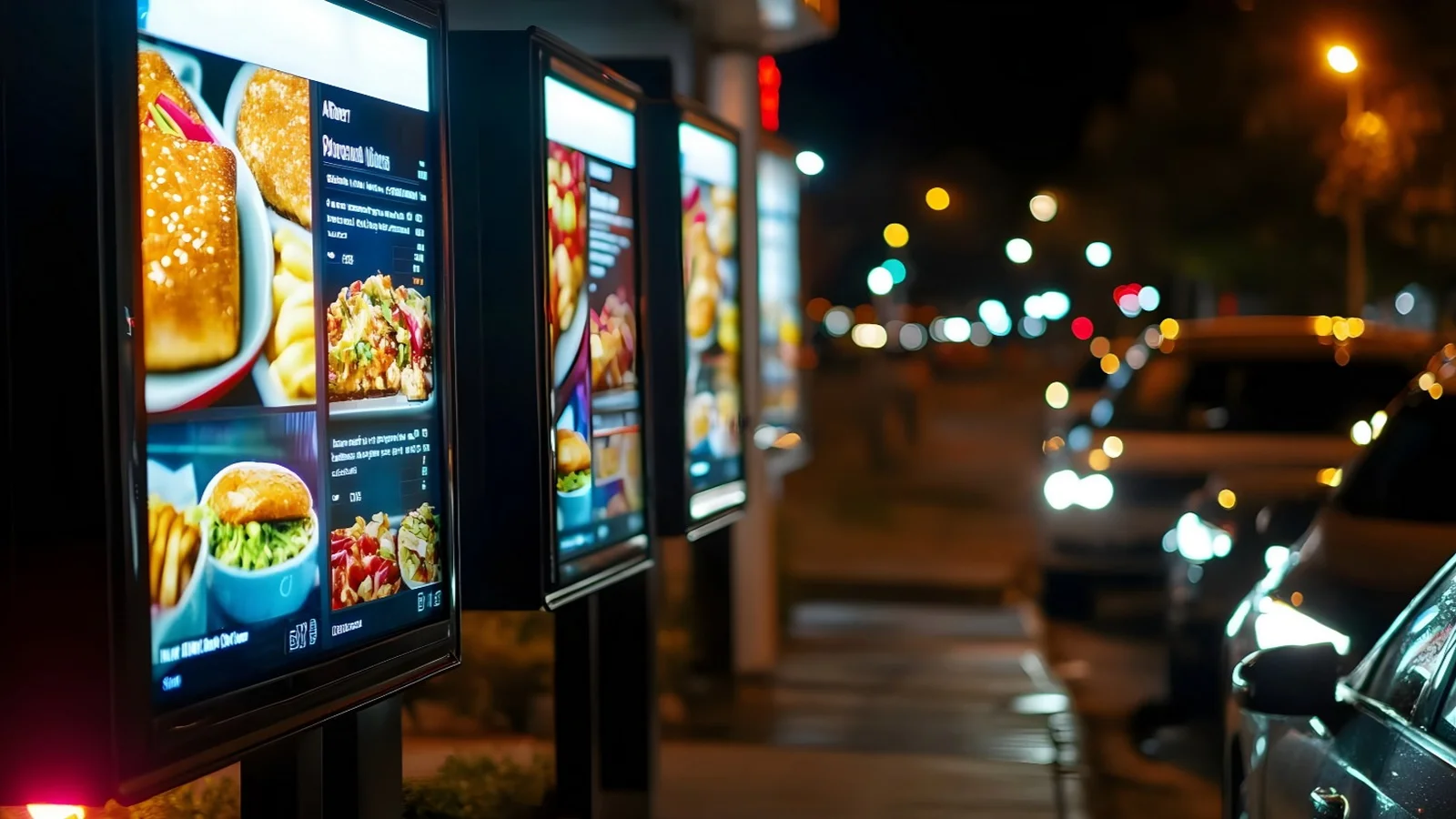
At the drive-thru, digital signage brings dynamism. Using a dedicated media player or an embedded solution for commercial-grade displays that pairs with remote management software allows franchises to create positive experiences. The modern drive-thru can feature content that displays a welcoming greeting, then shift to menu items or timely branded content as the customer moves through the lane. Having these content adaptations in real-time creates a flow that keeps consumers engaged. New age drive-thrus also present several upselling opportunities, showcasing limited-time promos, or seasonal menu items and offers that can influence purchasing decisions.
AI integration: A gamechanger for operations, staff and guests
The hardware that powers digital signage has evolved to usher in the new AI era. Franchises can now adopt media players with integrated neural processing units (NPUs), allowing them to transform their operational workflows. This grants the ability to run AI models that unlock new functionality and measurement.
An emerging use case that can improve service speed and keep staff well informed is crowd density and traffic measurement. This allows digital displays — when integrated with sensor or IoT technologies — to analyze and communicate periods of heavy traffic in real-time, informing staff and helping them focus their actions on service speed to match guest queues and orders.
One location within QSRs where franchises and owners are actively investing in AI is the drive-thru. Brands are piloting voice ordering and installing dynamic menu boards that react to order patterns, weather, time of day and more. In the drive-thru scenario, digital signage is the visual layer of the technology stack, equipping menu boards or other drive-thru technologies with the power to run AI models at the edge, enabling contextual, real-time and responsive performance. When drive-thru technology is paired with the right digital signage solutions, franchises can better keep pace in one of their most high-traffic locations, improving service speed and enhancing the customer experience.
AI-powered gaze detection is another strategic use case for franchises, bringing greater personalization and understanding of the impact of the overall restaurant experience. From a guest perspective, by understanding how many people are looking at certain content displays, and for how long, brands can better meet patron needs by creating an experience that is enjoyed. It can also help dictate if information might be hard to understand, or requires closer reading, which could inform a business to change content to better serve customers. Strategic uses of content within a QSR can not only improve individual experiences, but it can also reduce perceived wait times, keep customers informed on order status and even create a dining environment people want to dwell in.
From a corporate perspective, AI gaze detection can help maximize marketing and cross-channel efforts through measurement. This helps QSRs prioritize content that resonates with customers and influences purchases. This can have a direct impact on revenue and expenses, allowing corporate decision-makers to make better, analytical decisions. AI benefits signage networks by improving speed, latency, and security through operating at the edge, eliminating the need for cloud-based operation which can slow activity.
Investing In signage Is investing in the future
In-person experiences, especially in QSRs, aren't going anywhere any time soon; however, the expectations around those experiences are drastically different from what they were ten years ago and will likely be different ten years from now. Knowing this, QSRs are under heavy pressure to make the right technology investments.
Purpose-driven digital signage is an answer to that call, serving as a reliable and scalable solution within technology stacks that not only help solve today's challenges but can adapt, improve, and optimize to meet future challenges. By enabling greater customer personalization and improving experiences, and by providing insights that elevate operations and workflows, investing in digital signage is the strategic and future-proofed choice to support business development.
About Misty Chalk

Misty Chalk is the vice president of sales, Americas, at BrightSign, the global market leader powering the digital signage industry. She brings two decades of technology experience, helping both small and large organizations define their unique digital signage journey to meet the changing needs of consumers.
Related Media
Featured Vendor

Iconex is a leading label provider that improves productivity, streamlines operations, enhances customer satisfaction, and advances sustainability. Trusted by many of the world's largest food, beverage, retail, grocery, pharmacy, distribution, and quick-service restaurant brands.
Subscribe
Get the latest news and resources from QSR Web.
Recent Posts



Recent Podcasts