Press Release
The $162 Billion Question: Why Restaurant Operators Confuse Activity with Efficiency
This article exposes the $162B efficiency crisis in restaurants, revealing how 4-10% food waste and 144% turnover stem from flawed kitchen design. While 73% of operators increase tech spending, only automation of repetitive tasks delivers real ROI through 30% cost cuts.
December 29, 2025
Restaurant kitchens and quick-service operations are masters of controlled chaos. Staff hustling, tickets moving, orders flying out. Activity everywhere. So when someone suggests the operation might be profoundly inefficient, the natural response is confusion. Everyone's working hard—how could it be inefficient?
Then you look at the numbers.
According to the National Restaurant Association, commercial kitchens waste between 4% and 10% of every dollar spent on food before it ever reaches a customer. If you're running a QSR or fast-casual restaurant with a million-dollar annual food budget, that's $40,000 to $100,000 vanishing into prep errors, spoilage, over-portioning, and miscommunication. Across the foodservice industry, that waste totals $162 billion annually.
And that's just the food waste. When you waste ingredients, you've also wasted the labor to order them, receive them, store them, prep them, and attempt to cook them. The actual cost exceeds the food itself when you factor in these compounding back-of-house inefficiencies.
Most restaurant operators know waste happens. What they don't realize is how much stems from a fundamental design flaw in traditional kitchen operations: asking humans to perform like machines on repetitive tasks where consistency matters most.
Take fry stations in quick-service restaurants. Monitoring oil temperature, managing multiple timers, watching for doneness, coordinating with other stations—all while the lunch rush hits. When that person is new, which in an industry with 144% annual turnover they often are, error rates skyrocket. Over-portioning. Inconsistent cook times. Burned batches. Each mistake compounds.
The restaurant industry's response today? Adopt kitchen automation technology. According to recent data, 73% of restaurant operators increased tech spending last year—the highest adoption rate in history.
QSR chains and fast-casual restaurants deploying kitchen automation and AI-powered robotics report overall productivity increases of 11% and labor cost reductions of 30%. Smart cooking equipment and robotic fry stations cut operational costs by 30%. Restaurant inventory management systems reduce food costs by 3% to 5%. Automation handling repetitive cooking tasks increases fry station output by 30%, while virtually eliminating prep waste.
When you automate back-of-house execution properly with restaurant robotics, you don't just digitize inefficiency. You eliminate it. Exact portions every time. Perfect temperature control without attention drift. No retraining cycle when employees leave.
Full-service restaurants generate 3,050 pounds of food waste per employee annually. Limited-service QSR operations produce 2,751 pounds. That's not a rounding error. That's systemic operational failure in restaurant kitchens.
The uncomfortable truth? Restaurants and foodservice operations have accepted profound waste because labor used to be cheap enough to absorb it. At $20 an hour minimum wage, that same inefficiency becomes existential.
But wage pressure isn't creating this restaurant labor problem—it's exposing the operational inefficiency that was always there.
Restaurant efficiency is about how much value each dollar and each hour actually produces in your kitchen operations. And right now, the foodservice industry is leaving $162 billion in the trash.
By Miso Robotics, makers of Flippy AI-Powered Fry Station for QSR and Fast-Casual Restaurant Automation
Included In This Story

Miso Robotics
Delivering AI-powered technology that elevates human potential in the kitchen.
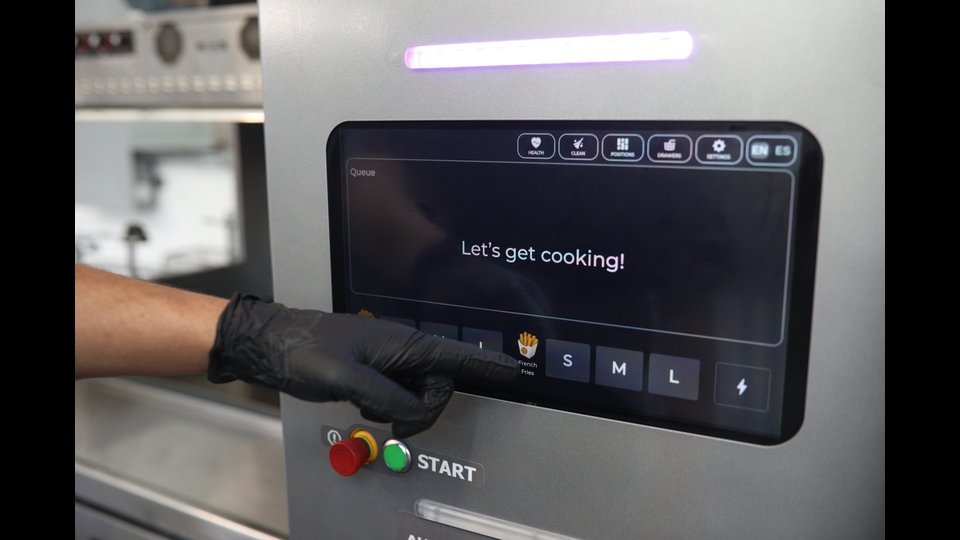
Through the AI-powered 'Flippy' fry station, Miso deploys proven AI automation that solves the fry station staffing crisis for high-volume restaurant chains. Flippy automates your entire fried menu operations end-to-end, the industry's most dangerous and hardest-to-staff position.
Related Media
Subscribe
Get the latest news and resources from QSR Web.
Recent Posts