Press Release
Modernize or Die: Why Bandaids Won't Fix Restaurant Hemorrhaging
Restaurant bankruptcies surge: 28% of 2024 corporate filings cite labor shortages. Miso Robotics CEO argues QSR operators must shift from customer-facing tech to kitchen automation. Back-of-house automation like robotic fry stations solves root staffing crisis by eliminating hard-to-fill, high-turnover positions—not just improving efficiency.
January 8, 2026
By Rodney Guerrero, CEO, Miso Robotics
Another week, another bankruptcy filing citing "labor shortages and inflationary pressures." As someone who's spent time in the food & beverage landscape before entering the operator AI & technology space, I've watched this tragedy unfold with the same predictable arc I've seen in failed film scripts: the protagonist knows the threat is coming but refuses to change course until it's too late.
The numbers I'm seeing tell me a truly devastating story. Restaurants comprised 28% of all large corporate bankruptcies in early 2024. Over 30 chains filed for Chapter 11 protection in 2024 alone, with labor costs cited as a primary driver in virtually every filing. Yet here's the paradox that should concern every operator: while 94% of restaurant operators identify labor costs as a significant concern, less than 30% say their technology investments have actually improved profitability.
Let me be very direct: operators aren't failing because they're ignoring technology, they're failing because they're investing in the wrong technology.
I see capital pouring into digital ordering platforms, loyalty apps, and customer-facing improvements while the back-of-house remains trapped in a labor model that hasn't fundamentally changed in 50 years. These investments simply improve efficiency around the margins. But when 62% of operators report they can't staff up to meet demand and 80% struggle to fill open positions, efficiency tweaks don't solve the core problem: you can't hire people who don't exist.
The restaurant industry is hemorrhaging workers, with turnover exceeding 130% in quick-service restaurants. That means operators must hire 1.35 times their workforce annually just to maintain current staffing levels. The industry remains 3.6% below pre-pandemic staffing levels with no recovery in sight.
"We invested heavily in operational improvements—new equipment, digital channels, menu simplification—and we saw measurable results," as one recent bankruptcy filing noted. But measurable improvements aren't enough when the underlying labor model is structurally broken.
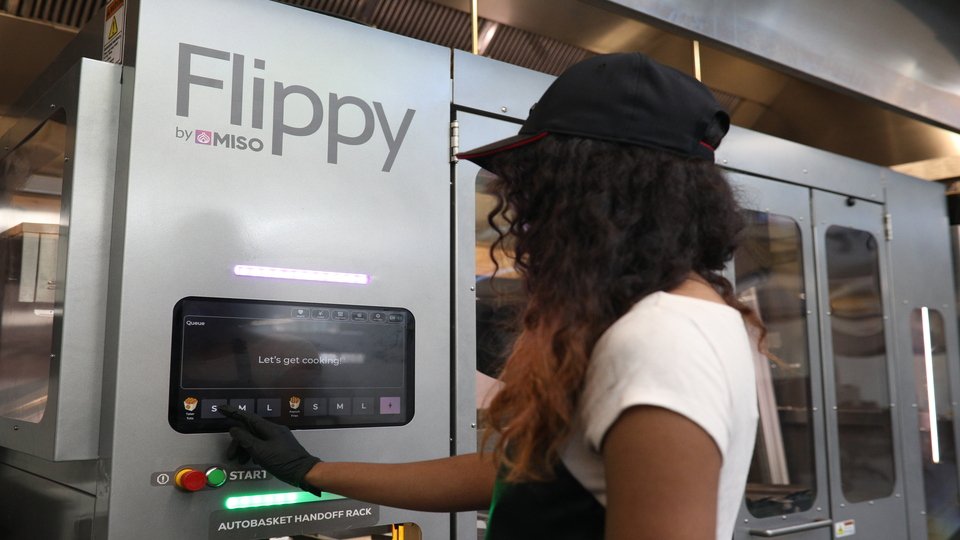
What I've learned partnering with brands through my time at Miso Robotics: technology that addresses symptoms (ordering speed, customer convenience) can't compensate for technology that solves root causes (labor availability, retention, safety). Our biggest QSR partner didn't deploy Flippy because they wanted to be innovative. They deployed Flippy because they needed workers and couldn't find them. Through this, they discovered that advertising "work with robots" actuallyincreased job applications.
The difference between operational improvement and operational transformation comes down to this: does your technology work aroundyour labor constraints, or does it fundamentally change them?
When you automate the fry station (consistently the hardest position to staff, with extreme heat exposure and safety risks) - you're not just improving efficiency. You're eliminating a structural barrier to profitability. You're freeing existing staff for customer-facing roles. You're reducing turnover and improving recruitment.
The bankruptcy filings will continue until the industry stops treating technology as an enhancement and starts treating it as infrastructure. The question facing every operator isn't whether to invest in technology, it's whether to invest in technology that preserves a failing labor model or technology that replaces it.
The capital markets are no longer patient. Neither are your competitors.
Included In This Story

Miso Robotics
Delivering AI-powered technology that elevates human potential in the kitchen.
Through the AI-powered 'Flippy' fry station, Miso deploys proven AI automation that solves the fry station staffing crisis for high-volume restaurant chains. Flippy automates your entire fried menu operations end-to-end, the industry's most dangerous and hardest-to-staff position.
Related Media
Subscribe
Get the latest news and resources from QSR Web.
Recent Posts