Operations
5 site selection lessons Dairy Queen uses to drive smarter QSR growth
Dairy Queen’s Tara Fried Vigil shared why using AI-driven data, boots-on-the-ground research and a realistic look at municipal timelines should shape a QSR’s growth strategy.
September 28, 2026 by Cherryh Cansler — Publisher, FastCasual.com
 ChatGPT
 Grok
Grok Perplexity
 Claude
For quick-service restaurant operators, finding a site can feel like a race. Dairy Queen's approach, however, is less about moving fast and more about making sure operators know exactly what they are getting into before they commit.
Tara Fried Vigil, a franchise developer at Dairy Queen working with existing and prospective Dairy Queen franchisees on new and additional locations, shared that approach during a panel talk at the International Franchise Association Global Show Saturday in Ft. Lauderdale.
Her message: Real estate is part science, part art and neither should be ignored.
For QSR operators thinking about where to grow next, here are five lessons from Dairy Queen's site-selection strategy.
1. Do the real estate homework before signing the franchise agreement
One of the biggest differences in Dairy Queen's process is when the real estate work happens. Rather than having a franchisee sign an agreement, pay a fee and then start looking for a site, Fried Vigil said Dairy Queen wants to understand the location first.
"We really want to know what you're getting into before you sign on the dotted line and close on that land," she said.
That means evaluating the site, estimating what it will take to build, considering the unit economics and identifying potential municipal or entitlement challenges before moving forward.
That's increasingly important as permitting timelines vary dramatically from one market to another; some municipalities can have permitting timelines of 16 months or more. For an operator with a specific opening target, that can completely change the growth plan.
"If you're someone that wants to be in business next year in Florida, we should probably look for a closed, quick-service conversion opportunity for you," she said.
The lesson for QSRs: Don't build a growth strategy around an opening date until you understand the local approval process that stands between the real estate deal and the first day of sales.
2. Don't let the spreadsheet make the entire decision
Dairy Queen uses data extensively in its site-selection process, including traffic counts, demographics, competitor information and sales prediction models, but numbers are only one part of the decision.
"Real estate is art and science," she said.
The science is the data. The art is going into the market and understanding what is actually happening there.
Fried Vigil said she typically analyzes a community before meeting with a franchisee and then physically drives the market, approaching the site from different directions and looking at ingress, egress, traffic patterns and the overall customer experience.
That can reveal things a demographic report can't: Is a new distribution center about to open? Is a road project coming? Is there a potential traffic study that could affect access? Is the site actually easier or harder to reach than it looks on a map?
Those details can materially change the opportunity.
3. Convenience can matter more than traffic volume
A site can have plenty of cars driving past it and still be the wrong site, which is why Fried Vigil evaluates locations from the perspective of a customer — including a parent with several children in the car who wants to get in, get food and get home.
That means asking whether customers can easily enter the site, whether they can see the restaurant and, just as importantly, whether they can get back where they need to go after leaving.
She gave the example of a site where a customer heading in the opposite direction might have to cross multiple lanes of traffic, wait at a traffic light and make a U-turn.If a competitor can be reached more easily, convenience can win.
"Most of us, at some point, make real estate purchasing decisions on who we're going to visit, no matter what the business, based on that convenience factor," Fried Vigil said.
Context matters, however. In a community where a median runs through a major corridor and everyone is accustomed to making a U-turn, the same traffic pattern may not be as much of a problem.
That's why Fried Vigil believes operators need to experience the market rather than simply study it.
4. Build the real estate strategy around the brand's actual economics
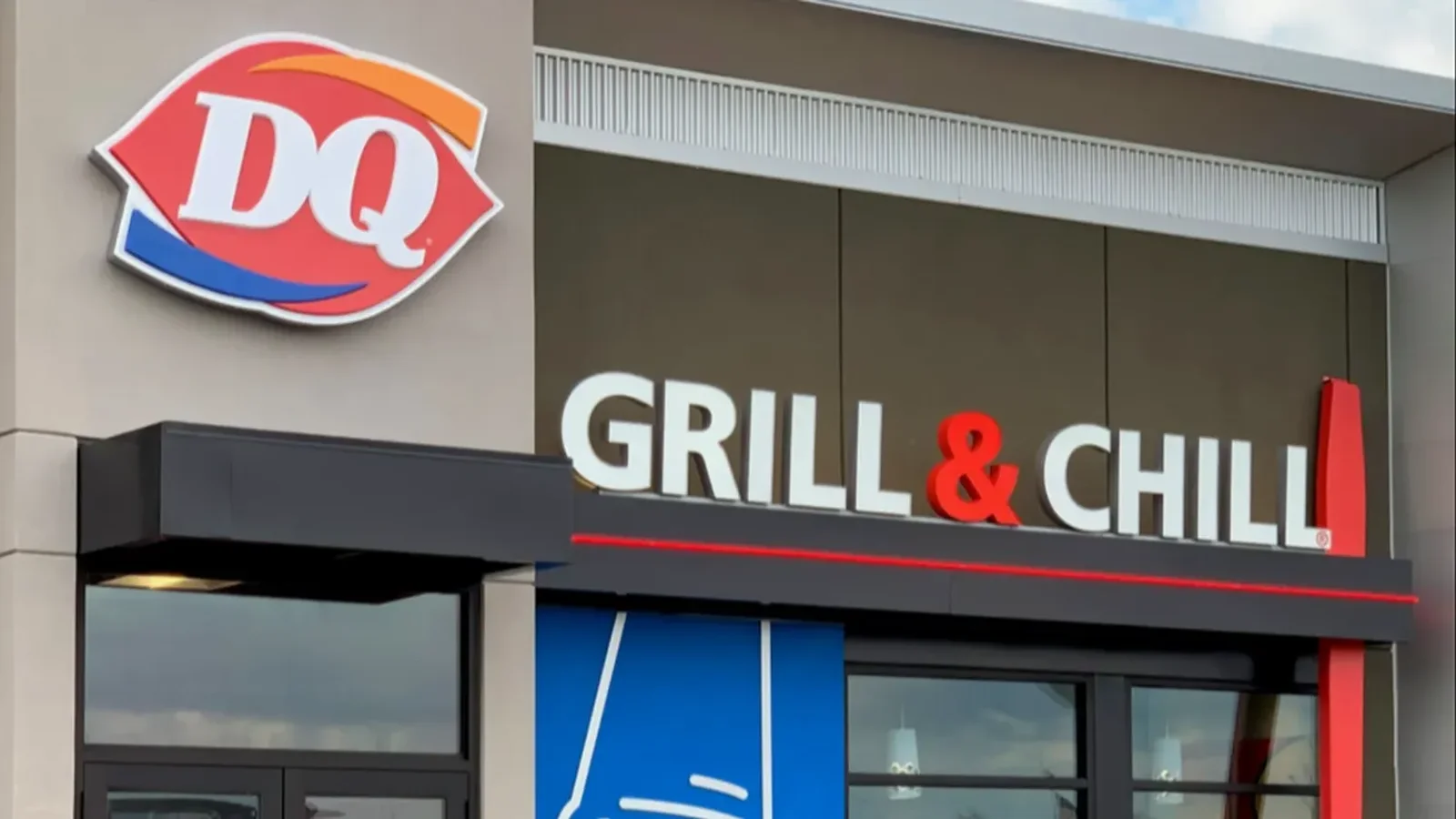
A site has to work for the concept, not just look attractive on paper. For Dairy Queen, that includes understanding the physical requirements of its Grill & Chill format.
Fried Vigil said the concept's two-kitchen model creates a larger investment than some competing concepts. She cited roughly $2 million as an all-in investment and said Dairy Queen would not consider spending more than $1 million on land for a 3/4-acre site.
The brand also needs a drive-thru, but the drive-thru itself has changed. During the pandemic, Dairy Queen's feasibility work might have called for a stack of five to seven cars. Today, Fried Vigil said operations wants the ability to accommodate seven to 10 cars at a minimum.
The footprint also has evolved.
The company has reduced dining space compared with older restaurants, typically targeting about 35 indoor seats, while outdoor seating can be important in warmer markets.
For operators, the takeaway is simple: Site selection has to start with the economics and operational requirements of the concept. A beautiful site that cannot accommodate the drive-thru, building footprint, access requirements or investment model isn't a good site.
5. Know when the data is wrong — or at least incomplete
Perhaps the most interesting part of Fried Vigil's approach is that she doesn't believe AI should always get the final word. She described a situation involving an experienced franchisee who strongly believed in a site even though the demographics weren't as strong as expected.
After visiting the market, Fried Vigil saw something the data hadn't fully captured: The location was on a major connector between two Georgia communities, had significant traffic, was near a Walmart and high school and served a county seat. The franchisee also understood the local community and had strong local-store marketing capabilities.
The location opened and performed well.
That's not an argument for ignoring the numbers. It's an argument for understanding what the numbers may be missing.
"There's times that franchisees feel very strongly about a site, and it does not track off the boxes," Fried Vigil said. Her approach is to investigate why, which can be especially valuable for experienced operators who have deep knowledge of a particular market or community.
Growth strategy needs a reality check, too
The bigger lesson from Dairy Queen's approach is that site selection shouldn't happen in isolation from the operator's broader growth plan. Fried Vigil works with franchisees on short- and long-term growth paths based on the markets they are entering and their operational infrastructure. That means a franchisee who wants to open next year may need a different strategy than one building a five-year portfolio.
A difficult permitting environment could make a conversion more attractive. A strong operator with deep local relationships may be able to recognize an opportunity that isn't immediately obvious in the data. A site with excellent traffic may still fail if customers can't conveniently get in and out.
And none of those conditions are permanent.
"You can never just ... say, 'Well, I know Fort Lauderdale like the back of my hand,'" Fried Vigil said. "In six months, the landscape could look completely different."
About Cherryh Cansler

Related Media
Subscribe
Get the latest news and resources from QSR Web.
Recent Posts



Recent Podcasts