National Restaurant Association
From scribbles to savings: Why precision labeling is the new profit protector
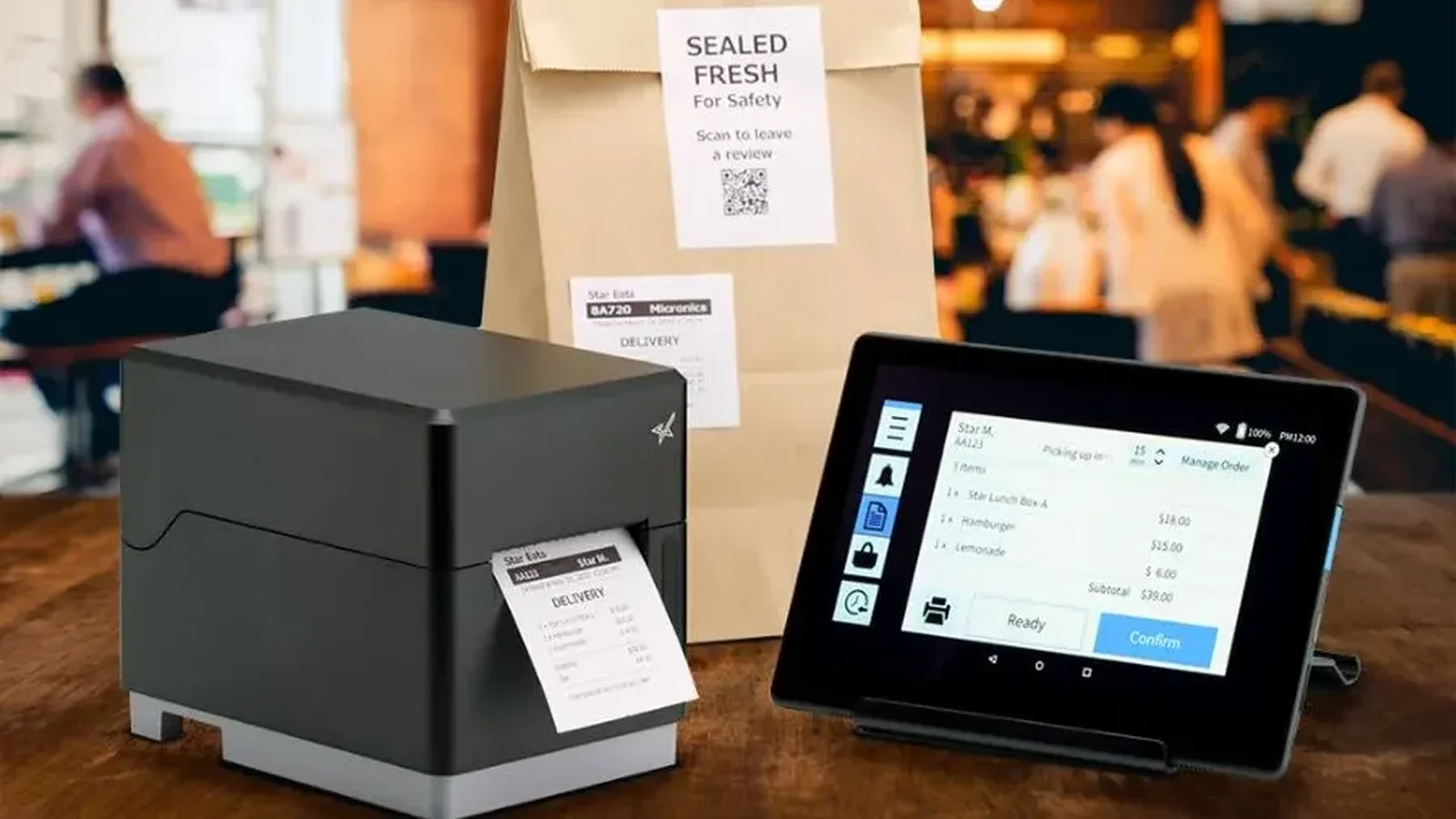
Star Micronics is showcasing its versatile mC-Label series at the National Restaurant Association Show this weekend, highlighting how high-precision labeling hardware improves order accuracy and streamlines kitchen workflows to protect restaurant profit margins from costly delivery chargebacks.

May 11, 2026 by Mandy Wolf Detwiler — Editor, Connect Media
 ChatGPT
 Grok
Grok Perplexity
 Claude
In an era where third-party delivery and complex digital customizations have become the industry standard, the humble adhesive label has evolved from a simple convenience into a critical safeguard for restaurant profitability.
For high-volume fast-casual and quick-service establishments, the margin for error is razor-thin; a single missing item or a misplaced "no onions" modifier doesn't just result in a frustrated diner, but often triggers a full revenue-killing chargeback. By integrating advanced "all-in-one" hardware like the Star Micronics mC-Label series, operators are replacing the guesswork of handwritten scribbles and bare bags with a streamlined Kitchen Display System (KDS) workflow.
These precision-printed labels with no bisphenol added serve as a final physical audit for staff — if a label remains on the counter after a bag is sealed, the order is incomplete — ensuring accuracy remains high, customer loyalty stays intact, and the bottom line is protected against the million-dollar drain of preventable mistakes.
Star Micronics will be showcasing several of its labeling products at booth No. 6454 at the National Restaurant Association Show in Chicago May 16-19. We talked to Craig Kaliebe, enterprise development manager for Star Micronics, about what the brand will be showcasing at the show and why labeling is a must-have for QSRs and fast casuals.
Q: The mC-Label series is described as uniquely flexible because it can handle receipts, die-cut, continuous and linerless labels all in one unit. How does this 'all-in-one' capability specifically help a high-volume restaurant reduce hardware clutter and streamline their Kitchen Display System workflow?
Kaliebe: Enterprise restaurants typically have spare printers in their storage room "just in case" they need to swap out a malfunctioning printer. Besides being a very reliable printer with very low maintenance required compared to other printers in the market, because the mC-Label printers can print receipts and all kinds of labels, restaurants only need one spare printer for all of those functions. Typically they have a spare for various labels and another for receipts. Since the mC-Label printers "do it all," the restaurants only need one spare. As for label printing, the mC-Label can print linerless and die-cut labels, so no matter what your label requirements, the mC-Label can do the job, cleaning up the clutter in the kitchen.
Q: The mC-Label2 offers 300 dpi while the mC-Label3 is 203 dpi. You've mentioned that images are scalable between the two without additional formatting — could you explain the technology behind that and why it's a gamechanger for developers and franchise owners?
Kaliebe: Sure. If a 3-inch label is designed for 203 dpi resolution on the mC-Label3, when the restaurant wants to transition to a 2-inch label on the mC-Label2, the label images and text are easily scaled to the 2-inch size thanks to the 300 dpi resolution. It's a seamless transition that requires no additional formatting. It scales perfectly without additional programming, drivers or code.
Q: While the mC-Label series is the 'jack-of-all-trades,' you also offer the TSP143IV SK. For a restaurant owner deciding between the two, what specific use case or environment makes the TSP143IV SK the better choice for linerless sticky labels?
Kaliebe: I wouldn't say it's a better choice, rather, it's a lower-priced option for certain applications. If the restaurant has no plans for die cut labels (great for catering or food safety) or permanent linerless labels (we recommend these to seal the bag for third-party delivery so that the customer knows the bag hasn't been opened since it was packed by the restaurant), then the TSP143IV SK is a good option. The TSP143IV SK can print receipts and removeable linerless labels — perfect for beverage labels, food modifiers and catering labels. If you're printing three or more labels at once, the die cut labels may be the better option, as they print multiple labels, in fast succession, almost instantly. Linerless labels print serially, one at a time, and the next linerless label won't print until the previous label was pulled from the printer. The "taken" sensor prevents a stackup of labels at the printer, so they only print as the previous one is pulled. This works great for beverages or food as they're being prepared, but for catering or food safety where they could print dozens of labels at once, the linerless labels might not provide the speed that the die cut labels offer.
Q: Reliability is everything in a busy kitchen. With the 'X4' versions offering USB, Ethernet, Wi-Fi and Bluetooth, how does Star Micronics ensure a stable connection in the 'noisy' wireless environment of a crowded restaurant or a massive trade show floor like the NRA Show? USB and Ethernet are easy in that they're dedicated wired connections.
Kaliebe: Tradeshow floors are difficult on any Bluetooth or WiFi connections, more so than a typical restaurant, as there are significantly more signals flying around. Connecting wirelessly with Star's printers is seamless, and our SDK makes it easy.
Q: Star Micronics emphasizes Prop-65 compliant media with no bisphenol added. Given the increasing focus on food safety and employee health in the hospitality industry, how has the demand for 'safe' media influenced your product development and your partnerships with software providers?
Kaliebe: All of Star's media is Prop-65 compliant and with no Bisphenols added. Prop-65 was California legislation to make drinking water safer, and the list of chemicals found to be dangerous has expanded over the years. Our software partners appreciate our dedication to safety and renewable resources. All of our packaging is recyclable.
Q: You mentioned that Star Micronics works with software providers to increase 'merchant profitability.' Beyond just printing a ticket, can you give us a concrete example of how the integration of Star hardware with modern POS/Catering software directly impacts a restaurant's ROI or customer loyalty?
Kaliebe:Yes, order accuracy is the lead determining factor as to whether a customer will return to that restaurant. If they order food through a third-party delivery and the order is wrong, there's a 25-50% chance that the customer won't order from them again. That certainly impacts loyalty and the customer experience. Additionally, if a third-party delivery order is wrong, the only recourse a customer has is to contact the online ordering vendor to request a refund. A chargeback is issued to the restaurant, and the restaurant loses all the revenue and profit from that order. If the order was labeled correctly, there are several checks throughout the process to ensure that the items were prepared correctly and no items were missing. Thus, a correct order gives the restaurant confidence that a chargeback won't be coming to diminish their profits later in the day.
For example, let's say you have an order for five cheeseburgers, five fries and five orange sodas (one diet), and that one of the cheeseburgers is to be made with no onions. The KDS would print labels for each cheeseburger, including the one without onions, each order of fries, and each orange soda, including the diet orange soda. If the attendant had extra labels after packing, they'd have an instant indicator that an item was missing from the order. Adding the label for the cheeseburger without the onions and identifying the diet orange soda makes the experience that much better for the customer as well, as they won't need to search all the items to find the cheeseburger without the onions or the diet orange soda. If we assume an average third-party delivery order is $30, then one less chargeback per day per location over a 100-restaurant chain would save them over $1 million in revenue per year ($30 x 100 locations = $3000 x 365 days = $1,095,000 per year). That is why order accuracy directly impacts a restaurant's ROI and customer loyalty.
About Mandy Wolf Detwiler

Mandy Wolf Detwiler is the Pizzamarketplace.com and QSRweb.com editor for Connect Media. An award-winning journalist, Mandy brings more than 20 years’ experience covering food, people and places. Mandy has been featured on the Food Network and has won numerous awards for her coverage of the restaurant industry. She has an insatiable appetite for learning, and, yes, she can tell you where to find the best pizza slices in the country.
Related Media
Subscribe
Get the latest news and resources from QSR Web.
Recent Posts


Recent Podcasts