Operations
Why QSRs are betting on the Sun Belt
Restaurant growth continues to concentrate across the Sun Belt, where population growth, development and shifting consumer demographics are creating new opportunities for restaurant chains. Here's a look at what's making the region such an attractive target for expansion.
September 8, 2026 by Valerie Gritton — Editor, Pizza Marketplace
 ChatGPT
 Grok
Grok Perplexity
 Claude
Restaurant development is increasingly following population growth, economic opportunity and new development, with the Southwest, Southeast and West emerging as the nation's busiest regions for restaurant activity.
RestaurantData.com tracked 9,541 restaurant opening and development records across the U.S. from January through June, offering a snapshot in its report, U.S. Restaurant Opening Cross-Tab Analysis: January-June 2026 Semi-Annual Report, of where operators are putting their growth dollars in the first half of 2026.
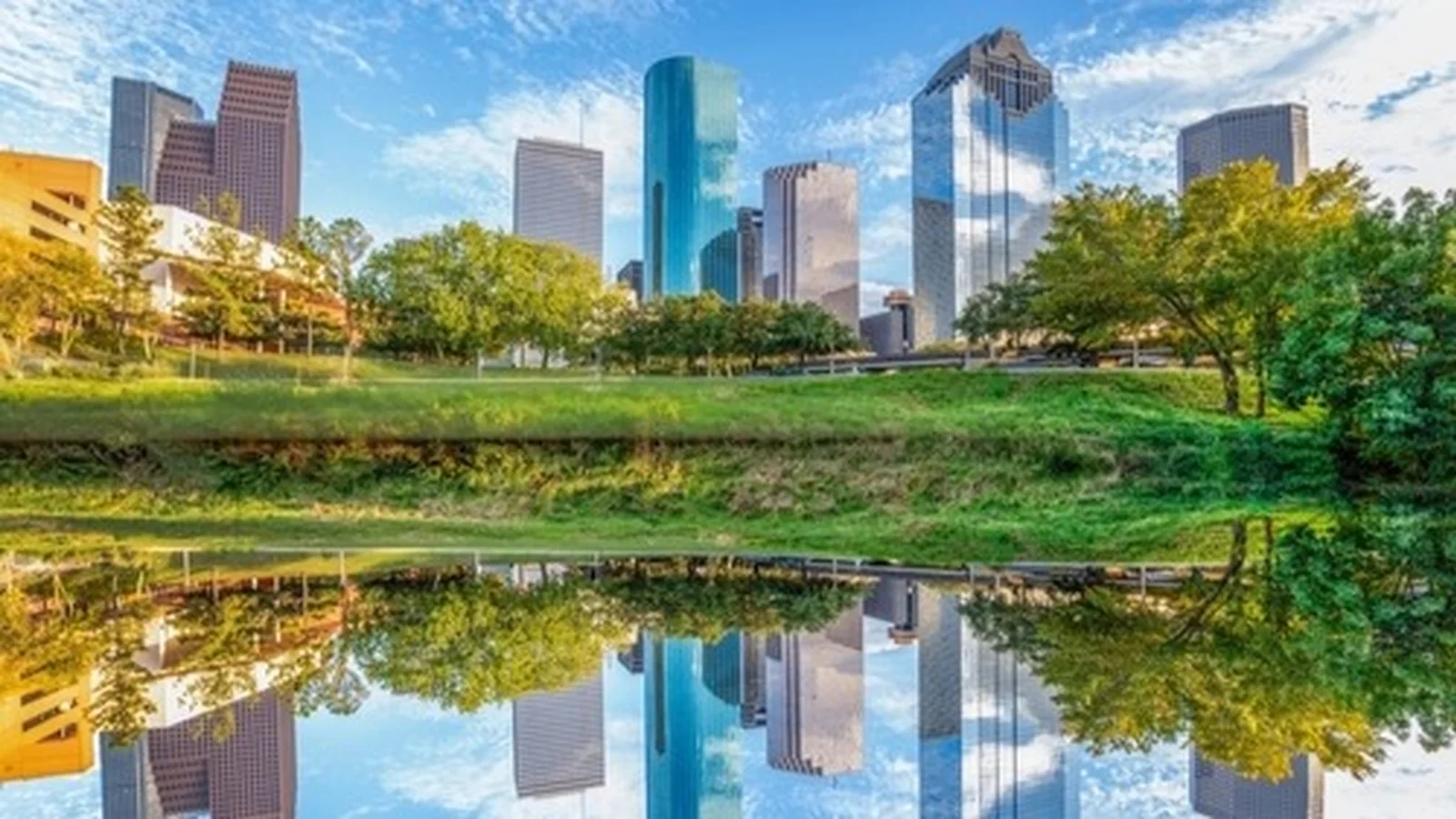
The Southwest, Southeast and West accounted for 76.9% of all tracked activity, with Houston leading every city market with 265 records. Los Angeles, New York, San Antonio, San Francisco, Dallas, Austin, San Diego, Miami and Brooklyn rounded out the top 10.
The data also shows that restaurants continue to favor established retail and mixed-use environments. Shopping centers and mixed-use developments accounted for 6,205 records, or 65% of all tracked activity, while free-standing buildings represented another 2,051 records, or 21.5%.
By service segment, casual and family dining remained the largest category, with 4,605 records, representing 48.3% of tracked activity. Fast casual accounted for 1,993 records, or 23%, while quick service restaurants represented 1,507 records, or 22%.
Houston takes the lead
Houston's position at the top of the RestaurantData rankings is hardly a surprise given the city's combination of population growth, economic diversity and continued development. And the market's restaurant scene continues to expand across a broad range of concepts.
According to the Houston Chronicle, 14 restaurants opened in Houston in July alone, spanning independent cafes and Mediterranean concepts to upscale steakhouses, bars and regional chains.
Houston's large and diverse population, along with its concentration of medical, energy, convention and tourism activity, gives restaurant operators multiple avenues for growth. According to the Kinder Institute for Urban Research, an estimated 126,270 residents were added to the greater Houston area between mid-2024 and mid-2025, leading all U.S. metropolitan areas in numeric population growth.
But Houston isn't an outlier.
The RestaurantData numbers point to a broader shift toward markets across the Sun Belt and West — areas where population gains and economic development are creating new customers, workers and real estate opportunities for restaurant operators.
The Southeast is gaining momentum
Population growth is one of the biggest pieces of that equation.
In a March 2026 analysis of U.S. population growth, the National Restaurant Association found that states across the Southeast and Mountain West are leading the country in population gains, a trend that has significant implications for restaurant development and growth.
More people means a larger potential customer base and a deeper labor pool, and when population growth is paired with an economic boom, the combination can become an important driver of restaurant sales, according to the Association.
The numbers illustrate the opportunity. South Carolina led the nation in population growth in 2025 at 1.5%, followed by Idaho at 1.4%, North Carolina at 1.3%, Texas at 1.2% and Utah at 1%. That's compared with national population growth of 0.5%.
For restaurant operators, those numbers help explain why development is increasingly moving beyond traditional restaurant strongholds.
El Pollo Loco follows the growth
El Pollo Loco provides one example of how a quick service chain is using those demographic shifts to guide expansion.
The fire-grilled chicken chain opened its first-ever Idaho restaurant in Meridian in July, marking its entry into its 10th state.
The opening is part of a broader expansion push. El Pollo Loco expects to open 18 to 20 restaurants systemwide in 2026 — nearly twice its 2025 pace — with the majority of new restaurants expected to open outside its home state of California.
The company is already seeing encouraging results from newer markets. Its Washington and New Mexico restaurants, both opened in 2025, have been performing above the system average, CEO Liz Williams said during the company's Q4 2025 earnings call March 12.
Idaho could become another important growth market. A second restaurant is scheduled to open in the state this fall, with additional development planned over time.
The strategy reflects a larger industry trend: Chains are looking beyond their traditional footprints and toward markets where population growth can support long-term restaurant demand.
Panda Express targets Texas
Panda Express offers another example of that strategy.
The California-based chain added 105 restaurants in 2025, its largest year-over-year development increase since 2016-17. This year, the company expects to add another 132 company-owned restaurants and 10 franchised locations.
Texas is among its biggest targets, with 12 company-owned restaurants and four franchised locations planned for the state.
The development push underscores the appeal of markets such as Texas, where population growth, business expansion and continued residential and commercial development are creating opportunities for restaurant brands.
Following the people
Taken together, the RestaurantData and National Restaurant Association findings suggest that restaurant development isn't happening in a vacuum.
Operators are following people along with jobs, new housing, retail development and economic activity.
The labor side of the equation is particularly important. The NRA reports that restaurant employment in Utah, Nevada and Idaho has climbed well above pre-pandemic levels, with employment up 15% in Utah and Nevada and 13% in Idaho when compared with 2019.
For QSR operators, that creates an important cycle: Population growth creates more potential customers and workers, economic expansion creates more spending power, and new development creates additional locations where restaurants can operate.
As El Pollo Loco moves into Idaho and Panda Express continues to expand across Texas, the industry's development map is becoming increasingly clear.
Related Media
Featured Vendor

Miso Robotics delivers AI automation for restaurants and hospitality. Flippy automates the fry station, reducing labor dependency with consistent execution at twice the throughput of manual operations. Zippy is your employee revenue engine, turning frontline performance into measurable business outcomes in real time.
Subscribe
Get the latest news and resources from QSR Web.
Recent Posts


Recent Podcasts