Fast Casual Executive Summit
FCES keynote: To go far, go together
Chicken Salad Chick’s story shows that scaling successfully isn’t necessarily about moving faster or constantly reinventing the brand. It’s about knowing what makes the concept work, protecting it and building the people and infrastructure necessary to replicate it.
October 5, 2026 by Valerie Gritton
 ChatGPT
 Grok
Grok Perplexity
 Claude
When Chicken Salad Chick launched in 2008, it was a simple takeout and drive-thru concept built around one thing: chicken salad. It wasn't exactly groundbreaking in terms of menu innovation, but sometimes the simplest ideas create the biggest opportunities.
On the surface, there wasn't much to suggest the small Auburn, Alabama, concept would become a national restaurant brand. But after six years in the Wendy's franchise business, Scott Deviney saw opportunity not only in what Chicken Salad Chick was, but in what it wasn't.
Instead of competing for the same young male customer targeted by burger chains, Chicken Salad Chick was distinctly female-focused. It offered freshly made food without the fryers and burgers Deviney knew well. Most important, he saw a concept that wasn't trying to compete in an already crowded restaurant category.
"You've got to differentiate yourself somehow with a category of one," Deviney said.
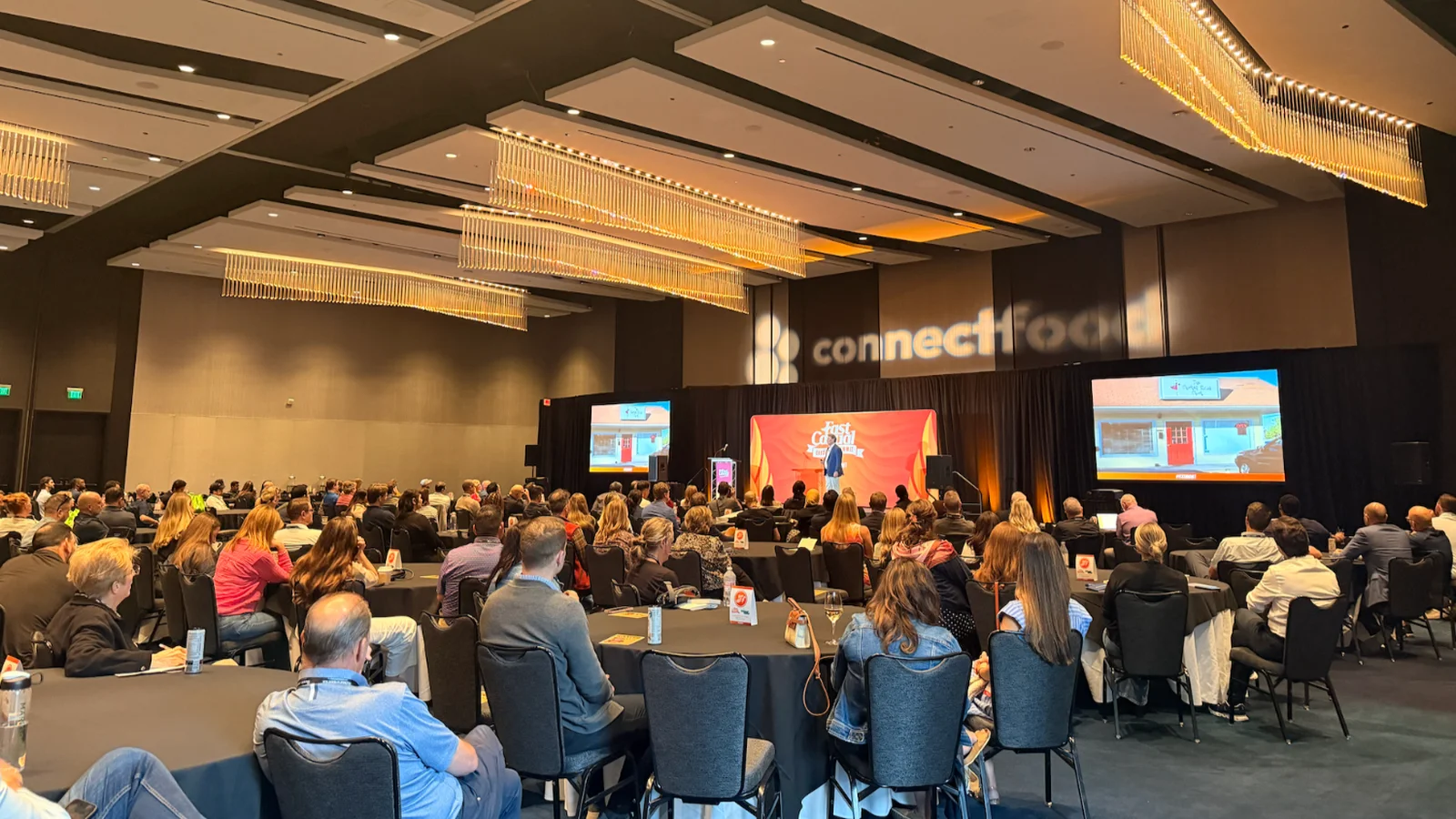
Deviney, president and CEO of Chicken Salad Chick, shared that lesson and others as the opening keynote speaker at this year's Fast Casual Executive Summit, held Oct. 4-6 in Arlington, Texas.
His history with Fast Casual goes back more than a decade. Chicken Salad Chick landed at No. 39 on Fast Casual's 2015 Top 100 Movers & Shakers list, a ranking Deviney joked was "pretty good" given Panera Bread, Blaze Pizza were the top two. That same year, Eagle Merchant Partners acquired Chicken Salad Chick and Deviney became president and CEO. At the time, the chain had 32 restaurants and comparable sales were down roughly 10.2%.
Turning the company around — and eventually scaling it — would require more than one person making the right decisions.
Deviney turned to a proverb that remains displayed on a wall in Chicken Salad Chick's Atlanta office: "If you want to go fast, go alone. If you want to go far, go together."
"That was the strategy we embarked on," he said.
Going together started with hiring people who were exceptional at what they did, regardless of whether they came from the restaurant industry.
"If you're really good at real estate, I don't care if you're in restaurants or not," Deviney said. "If you're really good at marketing, come join the team."
That philosophy eventually extended to franchisees and the infrastructure built to support them. Instead of pursuing the fastest possible path to unit growth, Chicken Salad Chick focused on building a system capable of supporting it. It also meant protecting what already worked.
"Don't ever mess with the core product," Deviney said.
Protecting the core
In 2019, Chicken Salad Chick reached another inflection point when Brentwood Associates acquired a majority interest. By then, the brand had grown to 137 restaurants across 16 states. That trajectory didn't come from constantly reinventing the concept. Deviney said it came from figuring out what worked and protecting it.
He believes some of the negative sales trends the brand experienced early on could be traced to seemingly small changes made to everything from the chicken salad to the tea and cookies. He called it "death by 1,000 slices."
An operator makes one small change to save on food costs or labor, he explained, then another the next year. Eventually, the restaurant can end up serving something different from the product customers originally craved. Today, the core Chicken Salad Chick plate — chicken salad with lettuce, a pickle, crackers and a cookie — is essentially the same as it was a decade ago.
That doesn't mean innovation stopped. Instead, the team learned to "play with the edges."
Chicken Salad Chick introduces limited-time flavors four or five times a year and has expanded into products such as bacon cheddar and chicken salad melts, creating new reasons to visit without fundamentally changing what customers already love.
Sometimes growth means slowing down
Chicken Salad Chick applied that same discipline to franchising.
Shortly after the 2015 acquisition, the company essentially stopped actively selling franchises for a year so leadership could understand what made a successful Chicken Salad Chick franchisee.
The team discovered many of its strongest operators were highly competitive people who liked scoreboards, rankings and measurable goals. Early franchisees included medical-device and pharmaceutical sales representatives, although the system has since evolved toward larger franchise organizations.
The pause underscored another lesson: Being able to sell franchises isn't the same as being ready to support them.
Deviney told attendees that only about 15% of franchise brands make it to 100 units. He attributed part of that difficulty to the cost and complexity of building the infrastructure necessary to support franchisees. Chicken Salad Chick's answer was an 80/20 strategy — roughly 80% franchised restaurants and 20% company-owned.
Cash generated by company restaurants could be reinvested into the support system, including training, marketing, grand openings and assistance getting restaurants operational.
Knowing when to say no
That philosophy also shaped where Chicken Salad Chick grew.
Rather than jumping into markets across the country whenever an interested franchisee appeared, the company adopted a concentric-circle strategy, expanding state by state from its Southeastern base. That sometimes meant turning down attractive opportunities.
"If you're owned by private equity that wants to grow very, very quickly, and you have a franchise request for California, and they're really ready to write you a big fat check, it takes a lot of guts to say 'no thanks,'" Deviney said.
Disconnected markets put additional pressure on marketing and supply-chain teams while requiring the company to repeatedly establish brand awareness, he said.
Chicken Salad Chick has maintained that state-by-state approach since 2015.
Growing around the core
Being disciplined about the core hasn't prevented the company from trying something new.
Chicken Salad Chick acquired Atlanta-based Piece of Cake after identifying an opportunity in desserts. The company already offered cheesecake, but refrigeration made it difficult to merchandise without taking valuable grab-and-go space away from packaged chicken salad.
Cake could be displayed without refrigeration, allowing Chicken Salad Chick to expand its dessert business without compromising the core product.
The broader growth strategy is reflected in the numbers. Chicken Salad Chick's first franchise disclosure document under the new leadership showed average unit volumes of about $900,000 in 2015. Deviney said AUV is expected to reach about $1.7 million this year.
For Deviney, more than a decade of growth still comes back to the proverb hanging on the wall in Atlanta.
Upcoming Events
Fast Casual Executive Summit
October 4-6, 2026 | Arlington, TX
The fast casual industry's BIGGEST event is back! Join industry leaders for game-changing ideas, powerful networking and serious fun.
View AgendaRegister NowRelated Media
Subscribe
Get the latest news and resources from QSR Web.
Recent Posts


Recent Podcasts