Operations
Before Zaxby’s and Cane’s, there was Guthrie’s: Now, the pioneer is scaling.
Guthrie’s, the pioneering 1965 brand that originated the quick-service chicken finger category, is leveraging its streamlined menu, highly guarded proprietary sauce and owner-operator franchisee partnerships to aggressively expand toward a 100-unit milestone.
July 24, 2026 by Mandy Wolf Detwiler — Editor, Connect Media
 ChatGPT
 Grok
Grok Perplexity
 Claude
In today's fiercely competitive quick-service chicken segment, where heavily funded giants battle for market dominance, it is easy to overlook the brand that hatched the entire category. Founded in 1965 by Hal Guthrie in Haleyville, Alabama, Guthrie's Chicken Fingers holds the undisputed title of the original chicken finger restaurant — a pedigree so deeply rooted in QSR history that the founders of massive modern competitors like Zaxby's and Raising Cane's actually learned the trade working inside early Guthrie's kitchens.
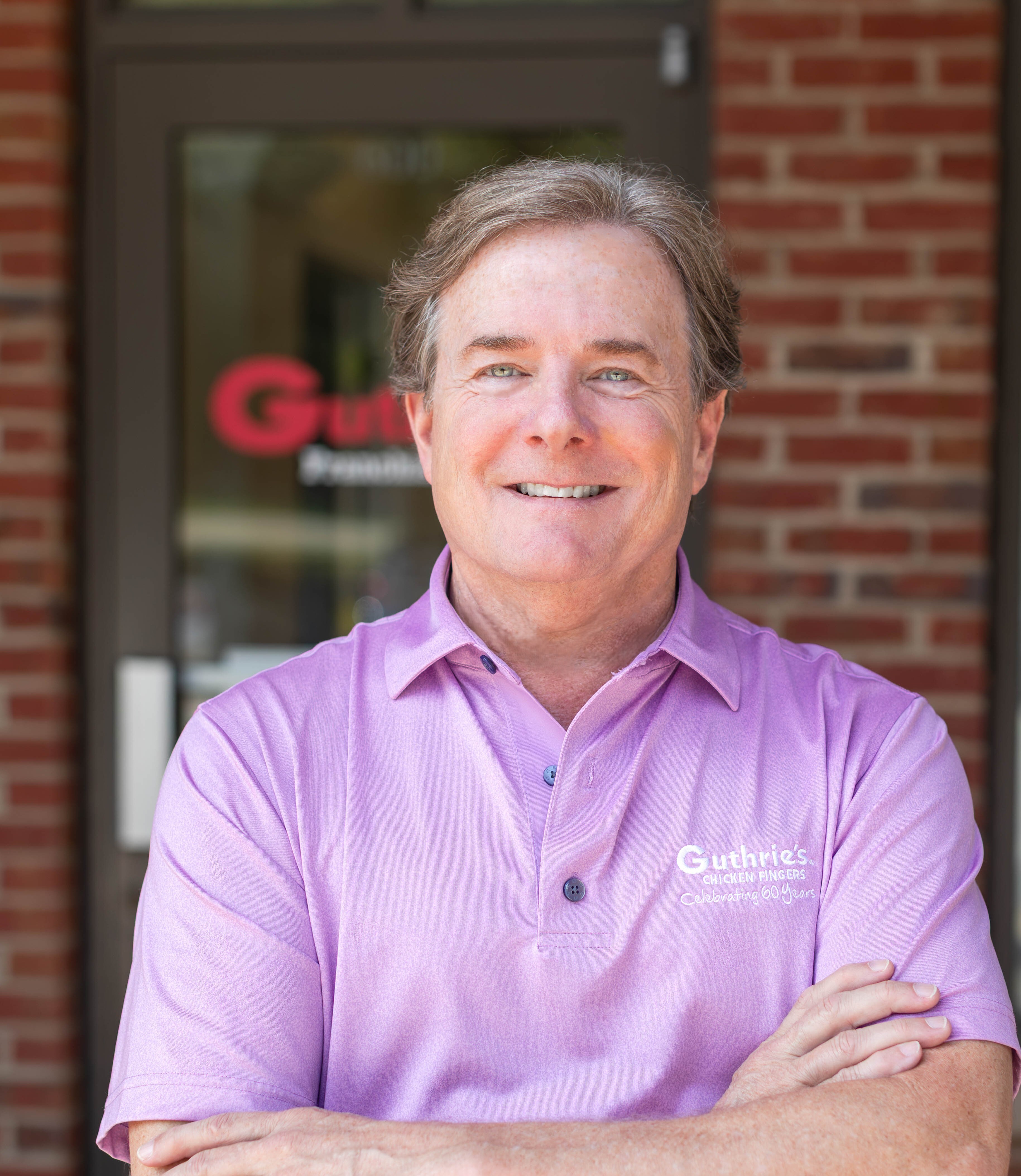 |
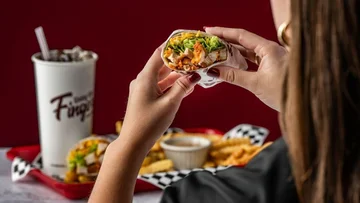
Photo: Guthrie's |
Now, as the family-run pioneer approaches its 61st anniversary, it is doing far more than just resting on its rich legacy. Armed with a famously guarded signature sauce, an unwavering commitment to a streamlined five-item menu, and aggressive franchise expansion plans across the Southeast, Guthrie's is rapidly scaling to cross the 100-unit milestone, proving that the original recipe for success still resonates powerfully in a crowded market.
Gutherie's was started by chicken pioneer Hal Guthrie in Haleyville, Alabama. A Guthrie's restaurant in Athens, Georgia was the first drive-thru location for the brand close to the University of Georgia when it opened in 1984 right off Sorority Row.
Cashing in on originality
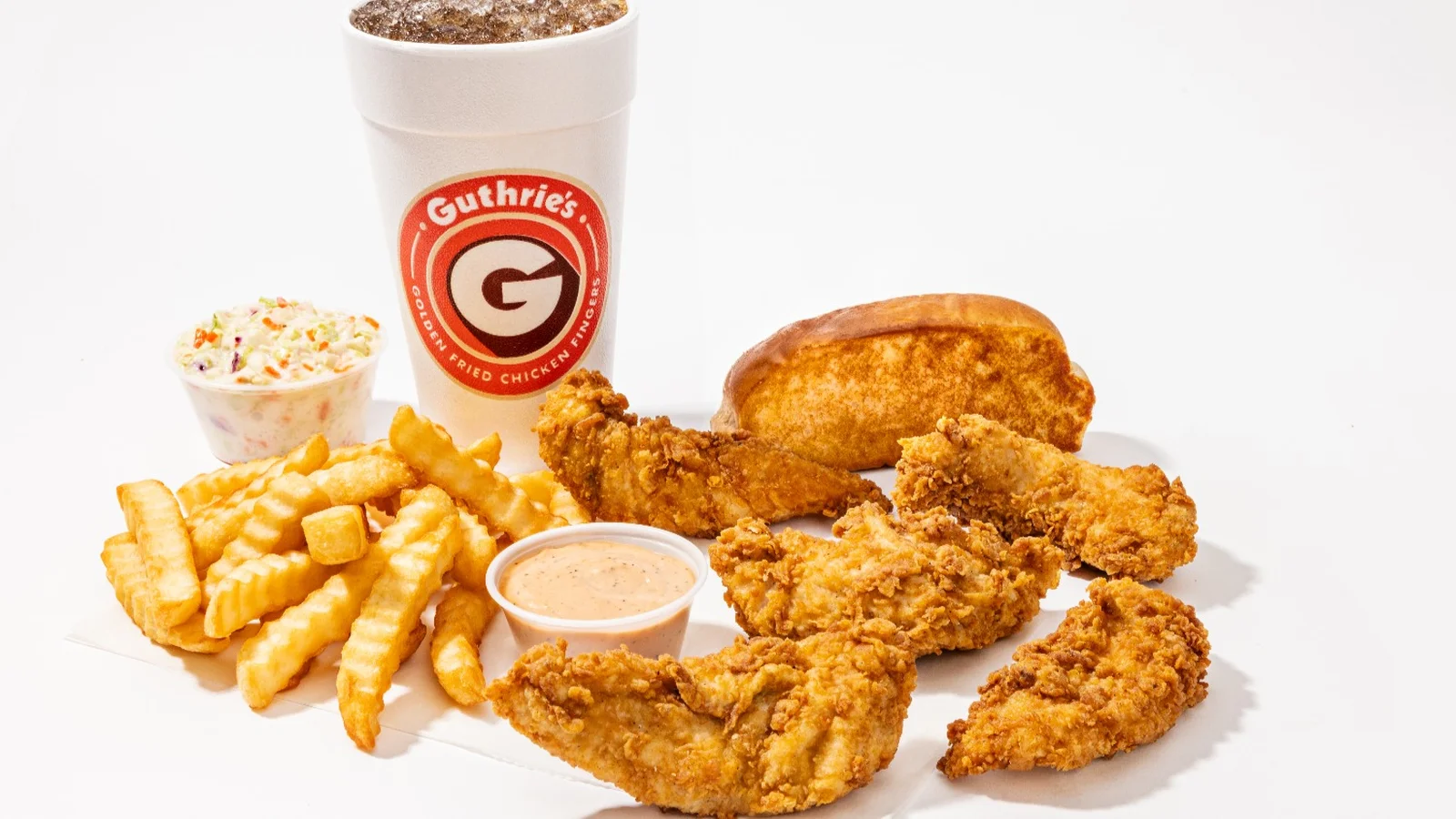
Today, Guthrie's has more than 70 locations across 11 states, predominantly in the Southeast. The brand has been moving farther out West, including four in Nevada. That could have lead the chicken finger brand to spread itself too thin, but President and CEO Tom Carr, who took over the role in January from CEO Joe Kelly Guthrie, said in a phone interview that "one of the things that's been kind of our growth and our focus is as the originator of the chicken finger, we are focused on that menu. So, in terms of not stretching ourselves too thin, a lot of that has to do with the fact that we sell chicken fingers, fries, coleslaw and Texas toast. People who are in our markets know us (and) love our chicken fingers. We actually do have the best recipe for chicken fingers as the originator, as well as the original sauce that is proprietary to us."
As Guthrie's grows, that menu simplicity gives its employees clarity around operations, which Carr admits might be "old fashioned" but not out of touch. Good training ensures the brand's signature food tastes the same in Alabama as it does in Nevada. Guthrie's stores get fresh chicken twice a week and use a proprietary marinade on the chicken that gives it its rich flavor. Then the chicken is breaded and fried by hand.
"We are not over-automated on fryer timers and things like that," Carr added. "It's still run a little bit the old-fashioned way. We make food, we care about what we put out, our eyes are on it. We're not just leaving it to AI timers to decide whether or not it's going to be a great chicken finger. I think that simplicity of focusing on what we do well is really how we're able to do what we do."
From an operational perspective, the brand's streamlined menu also simplifies the back-of-house training, reduces labor costs and optimized kitchen throughput. Guests simply choose how many chicken fingers they want, sides and/or a drink. Family meals and fingers by the bucket are available as well, and catering with chicken fingers in sets of 50, 75 or 100 make it simple. These pans come with multiple sauces for tailgating and other catering events.
The competitive edge
The QSR chicken finger segment has become crowded over the last decade, with big players like KFC and Zaxby's entering the field, and regional brands like Layne's Chicken Fingers in Texas in the market. Is the market saturated? Carr doesn't think so. Being the original is a "big leg up," he said. There's an expectation for the originator of a brand to be good.
"Your recipe is known. Your recipe is copied. A lot of it has to do with what we all do in the QSR space — looking for really good locations. Ours is a business like every other QSR where location does matter," he explained.
As long as a brand positions itself with both great real estate and exceptional food and service, that company will have a leg up on the competition.
To make sure that the customer experience is exceptional every time, Carr said Guthrie's is a family driven business, so people do matter. At many QSRs, the fryer is the low-man job in a restaurant.
"The person who's on our fryer, they're basically our chef," Carr added. "They're the ones that are managing the chicken fingers, getting them breaded, getting them in the in the fryer and watching them and making sure to put out the best product. They're actually the most important person in the kitchen at that time."
Guthrie's signature sauce and breading recipes have been perfected over 60 years and are often imitated. That's a form of flattery, but from intellectual property and supply chain security perspectives it's important to keep the recipes safe.
Carr said the brand's sauce "is as secretive as the Coca-Cola recipe" and the stores make the breading and follow the brand's signature, time-honored recipes to the letter.
 |
Photo: Guthrie's |
On a growth track
With such a rich culture and history, Guthrie's franchisees must be a fit for the brand, which is equally as important as having the financial capabilities to own one. Those relationships are significant, Carr said, and the brand is still in growth mode even after 60 years. They prefer to have owner-operators as partners as they expand.
"You definitely need to have somebody who has ownership in the operations to run a great franchise business," Carr explained. "So, if they're too removed, we're not looking for folks who aren't going to be engaged and involved at all in the business."
That doesn't mean that there's not room for larger franchisees to have a much bigger organization. "I think we can get the right culture and the right people in, but we find that we have a lot more closer owner operator relationship where they have two, three, five restaurants with us," Carr added.
The brand prefers stand-alone units with drive-thrus, which gives it flexibility and visibility in a competitive market.
While Guthrie's is growing, it prefers to cast a wide net with both single-unit and multi-unit operator franchising.
In the next year, Carr said the brand should hit 100 restaurants.
"I know it's a very small percentage of restaurant businesses that get to that to that mark," Carr added. "So we've got big plans for growth over the next year and got a plan in place for it. We're looking for development, and then underneath that we are actively franchising. So. I do expect that we'll be bringing in new folks into the brand as well."
He hopes to expand awareness, especially as Guthrie's grows in new markets.
"They may have experienced another chicken finger brand that has already been there but when we come in they're like, 'Oh wait, this is the original,'" Carr said. "And I think that gives us a leg up as we continue to grow."
About Mandy Wolf Detwiler

Mandy Wolf Detwiler is the Pizzamarketplace.com and QSRweb.com editor for Connect Media. An award-winning journalist, Mandy brings more than 20 years’ experience covering food, people and places. Mandy has been featured on the Food Network and has won numerous awards for her coverage of the restaurant industry. She has an insatiable appetite for learning, and, yes, she can tell you where to find the best pizza slices in the country.
Related Media
Featured Vendor

Miso Robotics delivers AI automation for restaurants and hospitality. Flippy automates the fry station, reducing labor dependency with consistent execution at twice the throughput of manual operations. Zippy is your employee revenue engine, turning frontline performance into measurable business outcomes in real time.
Subscribe
Get the latest news and resources from QSR Web.
Recent Posts
Recent Podcasts